
No products
Product successfully added to your shopping cart















































Viewed products
-

OICH350 ELDON Command...
Command handle, 350 OICH350
-

UPS-BAT/LI/24DC/189WH...
Battery Module (Battery Pack),...
-

-

Cables
Cables are the fundamental backbone of any electrical or automation installation, serving as the conductive pathways for power, control signals, and data transmission. In industrial environments, these are not simple wires but engineered components designed to withstand harsh conditions, including high temperatures, mechanical stress, chemical e...
Cables are the fundamental backbone of any electrical or automation installation, serving as the conductive pathways for power, control signals, and data transmission. In industrial environments, these are not simple wires but engineered components designed to withstand harsh conditions, including high temperatures, mechanical stress, chemical exposure, and electromagnetic interference. Key technical specifications include conductor material (copper or aluminum), cross-sectional area (measured in mm²), insulation type (e.g., PVC, XLPE, or silicone), voltage rating (e.g., 0.6/1 kV), and number of cores. Shielding options, such as braided or foil screens, are critical for signal integrity in automation networks. Globally, these are referred to as cables, wires, leads, or conductors, depending on the application and region.
Cables are deployed across virtually every sector of industrial automation and electrical distribution. In power distribution, they connect switchgear, transformers, and motor control centers (MCCs) within electrical panels and substations. For automation, control cables link PLCs, sensors, actuators, and variable frequency drives (VFDs) in manufacturing lines, conveyor systems, and robotic cells. Specialized cables, such as those with high flexibility for drag chains or armored variants for direct burial, are used in mining, oil and gas, and renewable energy installations like solar farms and wind turbines. They are also essential in building management systems for HVAC, lighting, and security networks.
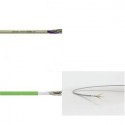
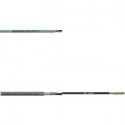
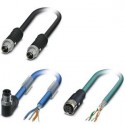
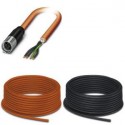
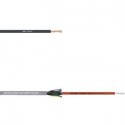
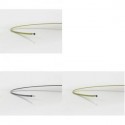
Within our catalog, the main subcategories include power cables (e.g., NYY, H07RN-F), control cables (e.g., LiYCY, YSLY), and data cables (e.g., PROFIBUS, Ethernet CAT6A). Key article codes often follow standardized patterns; for example, power cables may be coded as "NYY-J 3x2.5" indicating a PVC-insulated cable with 3 cores of 2.5 mm² each, while control cables might use "LiYCY 4x0.75" for a shielded signal cable. Other relevant items include flexible rubber cables (H07RN-F) for portable equipment and solar cables (PV1-F) for photovoltaic systems. These codes typically include conductor count, cross-section, and insulation type.
Partnering with Electric Automation Network ensures access to a vast inventory of certified cables from leading manufacturers, with real-time pricing and technical documentation for each article. Our engineering team provides personalized support to select the correct cable type for your specific application, considering factors like ampacity, voltage drop, and environmental conditions. We offer express shipping worldwide, minimizing downtime on critical projects. Whether you need a single reel of control cable or bulk power cable for a large-scale installation, we deliver with technical precision and commercial efficiency.
Subcategories
All ratings we receive from the items we offer are real and verified. A small gesture, but a lot of value. That's why we thank you for that minute you invest in leaving us your opinion and qualification about the products, because it helps us to continue improving and to offer you a service of even higher quality.