
No products
Product successfully added to your shopping cart



















































Proximity Sensors
Proximity sensors are the silent sentinels of modern industrial automation, designed to detect the presence or absence of objects without physical contact. These devices operate on various principles, including inductive, capacitive, ultrasonic, and photoelectric technologies. Inductive proximity sensors detect metallic objects, while capacitive...
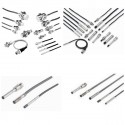
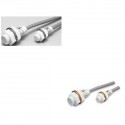
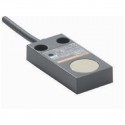
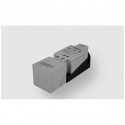
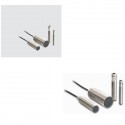
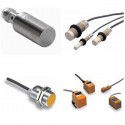
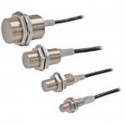
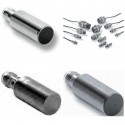
Proximity sensors are the silent sentinels of modern industrial automation, designed to detect the presence or absence of objects without physical contact. These devices operate on various principles, including inductive, capacitive, ultrasonic, and photoelectric technologies. Inductive proximity sensors detect metallic objects, while capacitive sensors can sense both metallic and non-metallic materials such as plastics, liquids, and powders. Ultrasonic sensors use sound waves for detection, ideal for transparent or challenging targets, and photoelectric sensors employ light beams for long-range or precise positioning. Key technical parameters include sensing distance (ranging from a few millimeters to several meters), output type (PNP, NPN, analog, or IO-Link), housing material (stainless steel, brass, or plastic), and degree of protection (IP67, IP68, or IP69K for harsh environments). These sensors are available in cylindrical (M8, M12, M18, M30), rectangular, or slot-style form factors, with flush or non-flush mounting options. They are essential components in conveyor systems, robotic arms, packaging machinery, and material handling equipment, providing reliable feedback for position detection, counting, and object verification.
Proximity sensors are deployed across a wide spectrum of industrial sectors, including automotive manufacturing, food and beverage processing, pharmaceuticals, logistics, and metalworking. In automotive assembly lines, they monitor part presence and alignment during welding or painting operations. In food processing, stainless steel inductive sensors with high IP ratings withstand washdown environments. Ultrasonic sensors excel in liquid level measurement and web tension control, while capacitive sensors detect fill levels in hoppers or silos. Photoelectric sensors are common in packaging for label detection, bottle counting, and pallet positioning. These sensors integrate seamlessly into PLC-controlled systems, fieldbus networks (PROFIBUS, PROFINET, EtherNet/IP), and safety circuits, ensuring precise automation and reduced downtime.
Our catalog includes a comprehensive range of proximity sensor subcategories, such as inductive proximity sensors (e.g., models with sensing distances from 2 mm to 40 mm, like the E2E or XS series), capacitive proximity sensors (e.g., E2K or CQ series for level detection), ultrasonic sensors (e.g., UC series with analog or digital outputs), and photoelectric sensors (e.g., E3Z or E3JK series with through-beam, retro-reflective, or diffuse modes). Key article codes often follow a pattern like "E2E-X3D1-N" for inductive sensors, where "E2E" denotes the series, "X3" indicates sensing distance, "D1" specifies output type, and "N" represents cable length or connector type. For photoelectric sensors, codes like "E3Z-T61" indicate through-beam type with a specific sensing range. We also stock specialty sensors for high-temperature or magnetic field applications.
Partnering with Electric Automation Network ensures access to genuine, high-quality proximity sensors from leading manufacturers, with real-time pricing and stock availability. Our engineering team provides personalized technical support to help you select the optimal sensor for your application, considering factors like target material, environment, and output requirements. We offer express worldwide shipping, ensuring your critical components arrive on time. Additionally, each product listing includes detailed technical documentation, wiring diagrams, and CAD files, empowering you to integrate sensors efficiently into your designs.

Subcategories



All ratings we receive from the items we offer are real and verified. A small gesture, but a lot of value. That's why we thank you for that minute you invest in leaving us your opinion and qualification about the products, because it helps us to continue improving and to offer you a service of even higher quality.