
No products
Product successfully added to your shopping cart


















































Viewed products
-

SI2003T7 GRAFOPLAST...
PLUMIN "ROTRING" 0,70 mm PARA PLOTTER...
-

MPGDA01 ELDON Depth...
Depth adjust kit MP console MPGDA01
-

-
SI2003T5 GRAFOPLAST...
PLUMIN "ROTRING" 0,50 mm PARA PLOTTER...
-

-

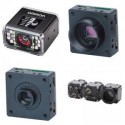
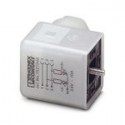
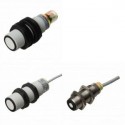
Sensors for automation technology
Sensors for automation technology are the fundamental building blocks of any modern industrial control system, acting as the primary interface between the physical process and the digital controller. These devices convert physical parameters such as position, temperature, pressure, flow, or proximity into standardized electrical signals, typical...
Sensors for automation technology are the fundamental building blocks of any modern industrial control system, acting as the primary interface between the physical process and the digital controller. These devices convert physical parameters such as position, temperature, pressure, flow, or proximity into standardized electrical signals, typically analog (4-20 mA, 0-10 V) or digital (PNP/NPN, IO-Link). In the automation world, you will find them referred to as transducers, detectors, or pickups, depending on the region and application. Key technical specifications to consider include sensing range, switching frequency, hysteresis, output configuration, and environmental protection rating (IP67 or higher for harsh environments). Whether you need inductive proximity sensors for metal detection, capacitive sensors for liquid level, or photoelectric sensors for long-range object detection, the selection must match the target material, distance, and ambient conditions.
These sensors are deployed across virtually every industrial sector, from automotive assembly lines and packaging machinery to food and beverage processing and pharmaceutical production. They are integral to conveyor systems, robotic workcells, hydraulic and pneumatic actuators, and material handling equipment. In a typical factory automation setup, sensors provide feedback for closed-loop control, safety interlocks, and quality inspection. They are mounted directly on machinery, in control cabinets via terminal blocks, or in the field using M12 connectors. The choice of sensor type and its electrical interface directly impacts the overall system reliability, response time, and maintenance requirements.
Within this category, you will find several key subcategories and article codes. For example, inductive proximity sensors are often coded with prefixes like "BI" or "NI" followed by dimensions (e.g., M12, M18, M30) and output type (e.g., "BI2-M12-AP6X"). Capacitive sensors use prefixes like "BC" or "NC", while photoelectric sensors use "BS" or "PS". Ultrasonic sensors are coded with "BUS" or "US". The main article codes typically follow a pattern: [Sensor Type]-[Housing Size]-[Output Logic]-[Connection Type]. For instance, a standard inductive sensor might be "BI5-M18-AP6X-H1141", where "BI5" indicates the sensing range, "M18" the thread size, "AP6X" the output (PNP, NO), and "H1141" the connector type.
Partnering with Electric Automation Network ensures you receive genuine, high-performance sensors with full technical documentation and real-time pricing. Our engineering team provides personalized support to help you select the correct sensor for your specific application, considering factors like target material, ambient light, temperature, and electrical noise. We offer express worldwide shipping, so your critical components arrive when needed. Avoid costly downtime and mismatched components by leveraging our expertise and extensive inventory.
Subcategories

All ratings we receive from the items we offer are real and verified. A small gesture, but a lot of value. That's why we thank you for that minute you invest in leaving us your opinion and qualification about the products, because it helps us to continue improving and to offer you a service of even higher quality.